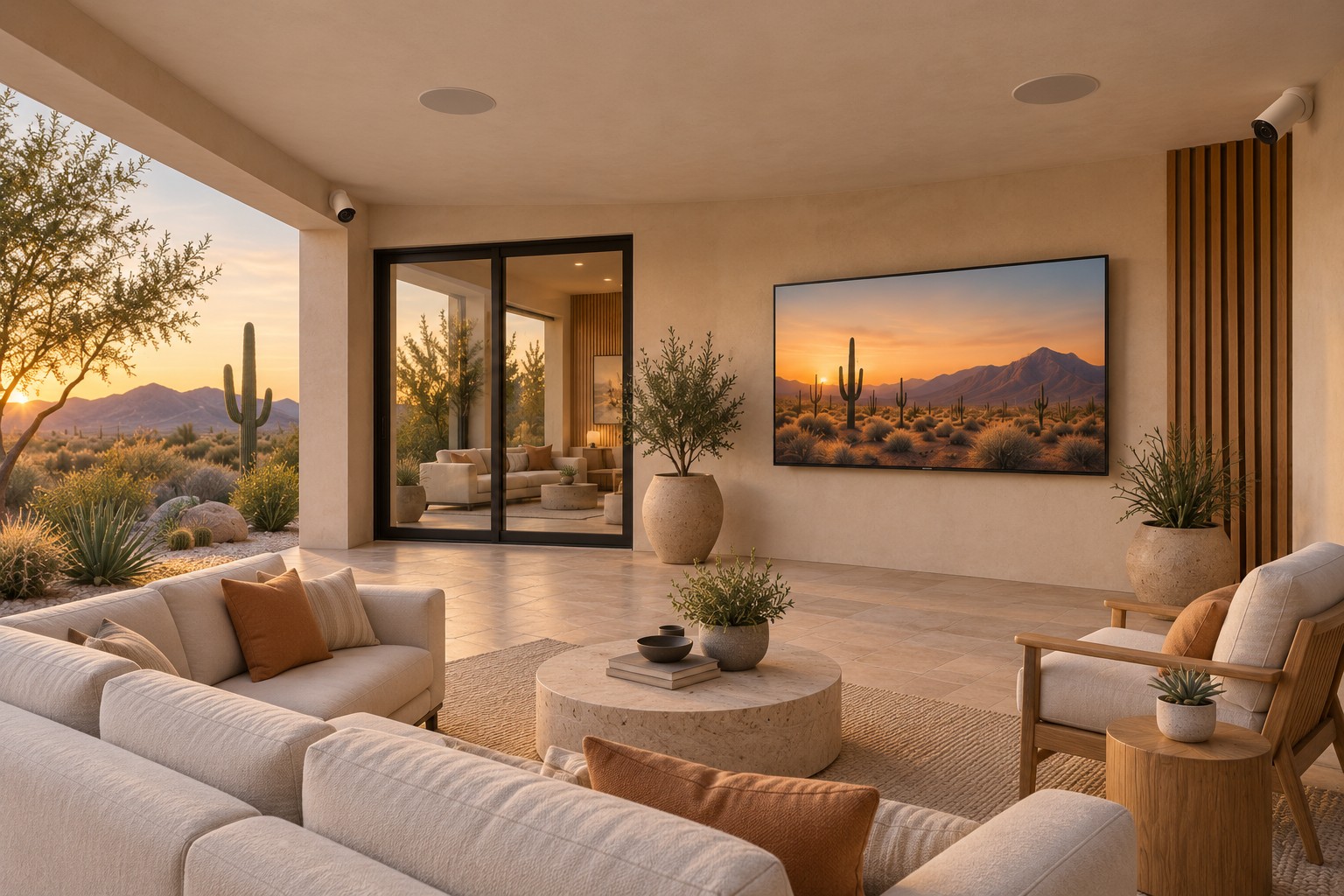
If music is too loud beside one patio speaker but hard to hear at the dining table, turning up the volume may leave someone uncomfortable. Start by reviewing where the speakers are, where they point, and which areas actually need sound. Outdoor audio installation should serve the places you sit and gather.
For a Greater Phoenix backyard, a covered lounge, dining area, and open yard can present different listening needs. A useful plan starts with those areas rather than a speaker count or a larger amplifier.
Map the listening areas before choosing speakers
Sketch the patio and mark the seats you use most. Include the dining table, grill area, doors, paths, and nearby property boundaries. Decide which places need music and which can remain quiet.
Then describe a normal gathering. Is the goal background music while people talk, a soundtrack near the pool, or TV audio at one seating group? Those are different jobs. Avoid designing the whole yard around the loudest use case if everyday listening is usually a small group under the patio cover.
An installer can use this information to assess speaker positions and cable routes. PHE’s outdoor entertainment service considers patio sound alongside the rest of the outdoor AV plan.
Aim sound toward the people using the space
Start by checking the direction of existing speakers. A speaker mounted high under a cover may need to aim toward the seats, rather than straight across the yard. For its Outdoor by Sonance speakers, Sonos specifically advises directing them toward the listening area and adjusting their angle when mounted above or below ear level. Follow the instructions for the actual model rather than applying one mounting angle to every speaker. Sonos Outdoor by Sonance installation manual
Ask to review where the sound is aimed relative to neighboring yards and windows. Placement can help focus the design on your listening area, but it cannot guarantee that sound stays within your property. Listen at the boundary as part of the final assessment.
Consider distributed coverage when the listening area spreads out
A pair of wall-mounted speakers may suit a compact patio. A larger or divided outdoor space deserves a comparison with speakers distributed around the areas people use. The question is whether the proposed arrangement can cover the seats comfortably without making the nearest seats excessively loud.
As one example of this design approach, Sonance describes its landscape systems as using multiple satellite speakers to provide even, balanced coverage. That supports considering distributed sound; it does not establish a universal spacing rule or a required speaker count for your yard. The selected system, mounting positions, landscaping, and listening goals determine the design. Sonance landscape audio systems
For an illustrative layout, imagine a lounge under the patio cover and a dining table beyond it. Compare a design that relies on the lounge speakers reaching both areas with one that provides coverage nearer the table. Discuss the tradeoffs in wiring, appearance, equipment, and control before choosing either option.
Decide whether the patio needs its own listening zone
Coverage and control are separate decisions. Even if indoor and outdoor music sometimes play together, you may want the patio off while music continues in the kitchen. Tell the installer when the spaces should operate together and when they should be independent.
Ask the proposal to explain the source and volume controls available in each listening area. Do not assume that adding more speakers creates independent zones. PHE’s whole-home audio installation can be discussed alongside outdoor sound when you want a coordinated indoor and patio system.
Review exposure and amplifier location separately
Choose speakers for their actual installation conditions. Under a patio roof, equipment can still face heat, dust, and wind-driven moisture. Verify the chosen model’s environmental requirements, mounting method, and cable connections rather than relying on a general outdoor label.
The amplifier has its own requirements. For example, Sonos lists Amp’s operating temperature range as 32–104°F and instructs users to keep ventilation openings clear and avoid rain or moisture exposure. An outdoor-rated speaker does not make its amplifier outdoor-rated. In Phoenix, an unconditioned cabinet or garage needs assessment against those limits. Sonos Amp operating and installation guidance
For a planned Sonos installation, have the exact speaker models, electrical load, wire runs, amplifier location, and network connection checked together. Existing wiring should be assessed before the equipment plan is finalized.
Test the system from more than one seat
During the walkthrough, play familiar music at the level you would normally use for conversation. Listen from the lounge, table, and any other intended area. Check whether one seat is dominated by a nearby speaker while another is difficult to hear.
Also listen near the house and property boundary. Ask the installer to assess aiming, balance, and level settings if coverage is uneven. Raising the overall volume should not be the only response to a quiet spot.
Confirm how to select music, change patio volume, and turn the outdoor area off. If a patio television is included, test its controls and audio separately so the music setup is not assumed to cover every TV requirement.
Plan patio audio with Pro Home Entertainment
Pro Home Entertainment is a family-owned AV integration company serving Greater Phoenix. Share photos of your patio, the seating areas, existing speakers, and any equipment cabinet. Tell us where you want music and whether it should operate independently from indoor rooms.
Request a Quote to discuss patio speaker placement, outdoor audio coverage, and a system planned around the way you use your backyard.